Graphene origin
Our graphene comes from our self-developed production system and is processed through our co-located pilot plant.
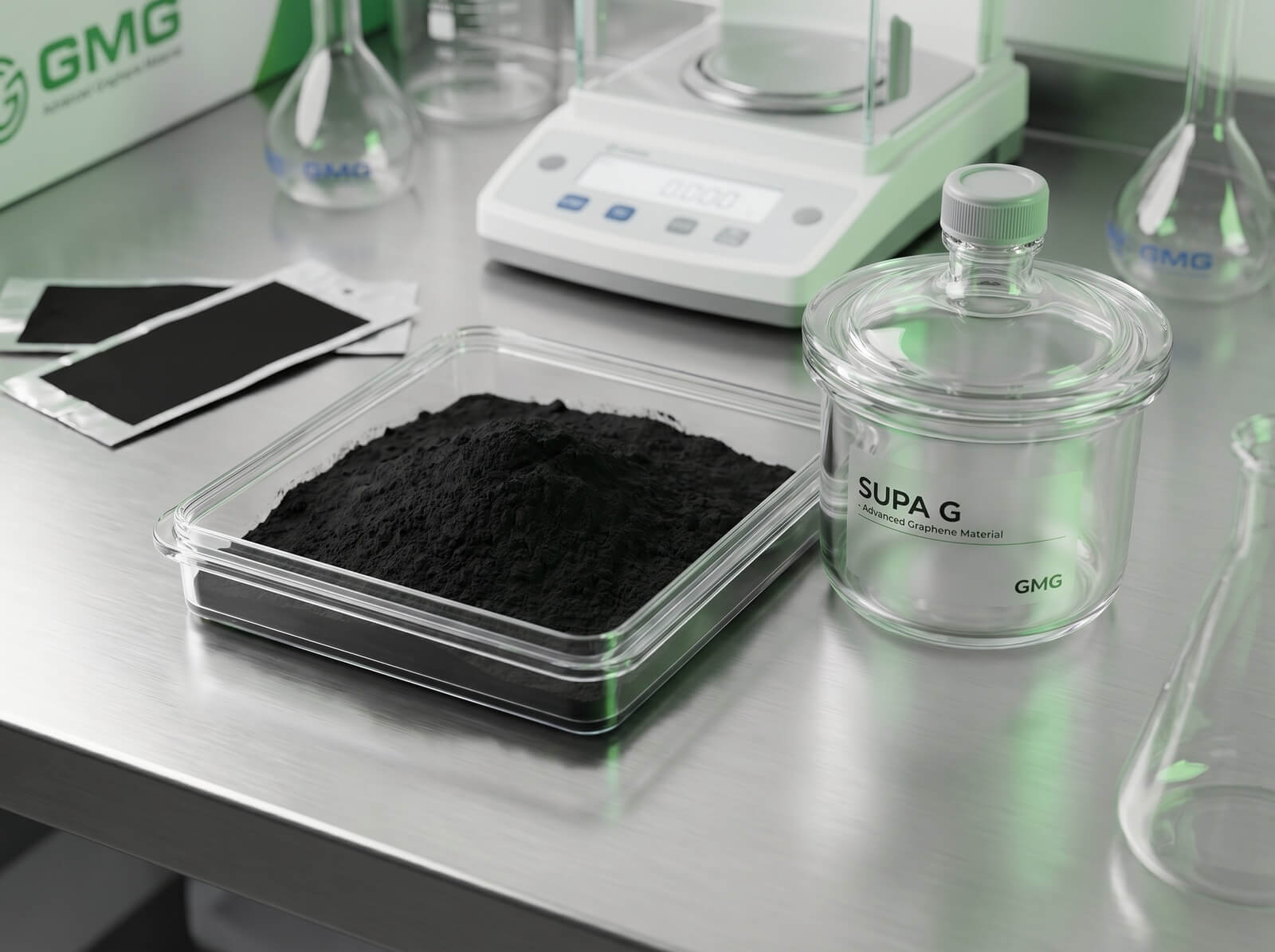
SUPA G® is GMG’s graphene slurry for lithium-ion battery enhancement. It is designed as a liquid graphene material that can be added into or coated onto customer lithium-ion battery cathodes and anodes.
A liquid graphene material creates a practical route for battery trials and electrode development.
We designed SUPA G® for addition into or coating onto lithium-ion cathodes and anodes.
Product materials describe 0.5-2 wt% loading by weight for evaluation.
We link SUPA G® to charge and discharge rate-tolerance behaviour.
SUPA G® turns our graphene into a material format battery teams can test directly. Instead of an abstract ingredient, our slurry gives partners a practical way to run electrode trials and controlled integration work.
Our graphene comes from our self-developed production system, is processed through our co-located pilot plant, and finished into a liquid graphene product for lithium-ion battery electrodes.
Developed from our in-house graphene production and pilot-plant processing.
Positioned for lithium-ion battery cathode and anode development.
Built for technical validation before broad commercial claims.
We keep it simple: what you’re getting, how it fits into your process, and what to test first.
Everything stays focused on integration: graphene source, slurry processing, low-dosage electrode use and partner validation.
Our graphene comes from our self-developed production system and is processed through our co-located pilot plant.
The liquid graphene format gives partners a practical way to handle, test and integrate the material.
We position SUPA G® for adding into or coating onto lithium-ion battery cathodes and anodes at low loading.
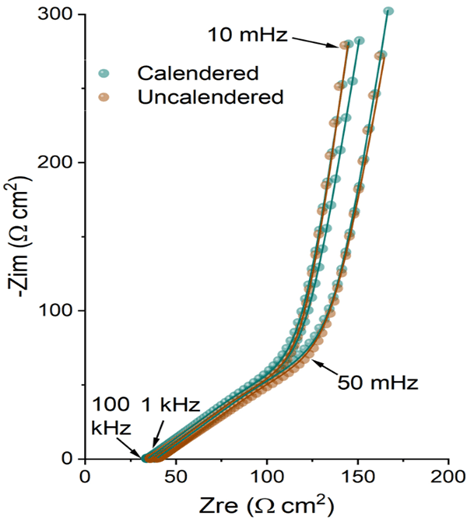
The next step is controlled partner testing: conductivity, loading, calendaring integrity and high-rate battery behaviour.

The numbers that matter most: resistivity, loading, surface area, density, particle structure and rate behaviour.
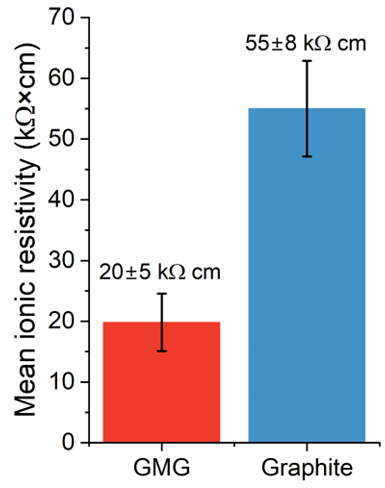
We report 2.5 times lower mean ionic resistivity than standard graphite in the recent study.
Our material has 0.5-2 wt% loading, compared with 2-5 wt% for common carbon additives.
We measure approximately 250 m²/g surface area, compared with about 60 m²/g for a common additive.
SUPA G® has a bulk density of 0.3-0.4 g/cm³.
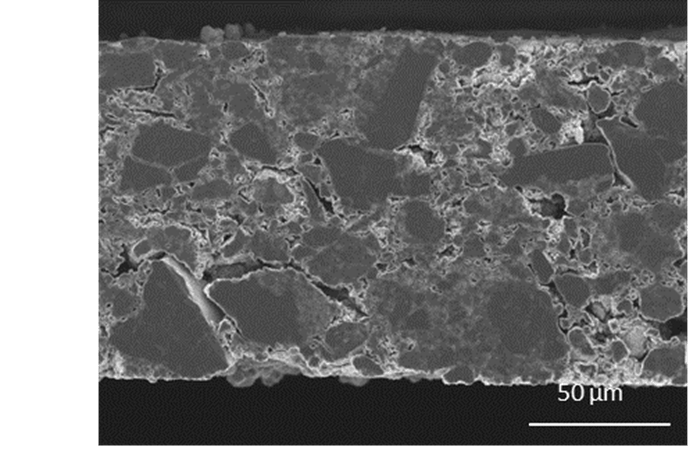
Our particles range from around 20 µm down to sub-1 µm.
In our testing, our graphene improved lithium-ion battery rate tolerance.
We've put three technical figures and a comparison table together, so you can see the evidence in one place.
| Property | Standard industry lithium-ion battery carbon additive | GMG SUPA G® |
|---|---|---|
| Bulk density | 0.12-0.25 g/cm³ | 0.3-0.4 g/cm³ |
| Surface area | ~60 m²/g | 250 m²/g |
| Typical loading in electrode | 2-5 wt% | 0.5-2 wt% |
| High-rate performance | Standard application | Excellent for very high-rate applications |
SUPA G® is the right fit once you’re ready to test – you know your target electrode or application and have a testing plan in place.
For cathode and anode teams evaluating conductive additives, electrode loading and high-rate performance.
For partners that need a practical material format before testing coatings, composites or other applied programs.
For organisations evaluating material access, validation requirements and supply assumptions.
No. SUPA G® is a graphene slurry material for battery enhancement and application development – a component for battery work, not a finished battery cell.
SUPA G® is a liquid graphene product that can be added into or coated onto lithium-ion battery cathodes or anodes.
The first proof points are ionic resistivity, particle distribution, bulk density, surface area, loading range, calendaring integrity and high-rate behaviour.
You can discuss the target application, material requirements, validation method and commercial assumptions with our team.
Just like our graphene-enhanced products maximise efficiency, we use cookies to keep this website running at peak performance. These tools help us measure site traffic, secure your connection, and load embedded content such as videos and maps.